When the City No Longer Cools Down at Night
How a balcony can help prevent overheating in summer
A balcony does not automatically keep the flat cool. Its true effectiveness is determined early on in the planning stage – not just at the tender stage.
In June 2026, GeoSphere Austria recorded new June record highs at 157 out of 277 measuring stations. At the Jubiläumswarte in Vienna, the temperature did not drop below 27.3 degrees in one night.
On such tropical nights, the cooling potential of window ventilation is severely limited. The air outside is simply too warm. This is precisely why it is during the day that it is determined just how much a flat heats up in the first place. And this is exactly where the balcony comes into play.
How can a balcony help to cool a flat?
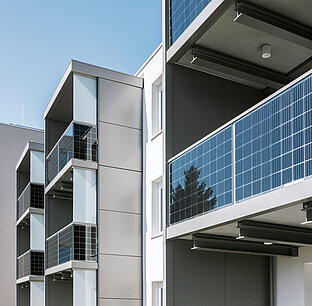
A balcony cannot cool a flat – it simply casts a shadow over the window behind it. If the balcony shades the relevant window area, it reduces the amount of direct solar heat gain. Otherwise, it remains a pleasant place to spend time without having any effect on the indoor climate. External shading is one of the most effective measures against overheating in summer, as it intercepts some of the sun’s rays before they reach the glazing.
The key factors are, above all, the orientation, the depth of the balcony and the position of the windows. On south-facing façades, a sufficiently deep overhang can be particularly effective because the summer sun is high in the sky. On east- and west-facing façades, a horizontal overhang is often insufficient because the sun is low in the sky in the morning and evening. Here, additional adjustable sun protection, such as external blinds, is required. A balcony that is too small will not be effective at all – regardless of its orientation.
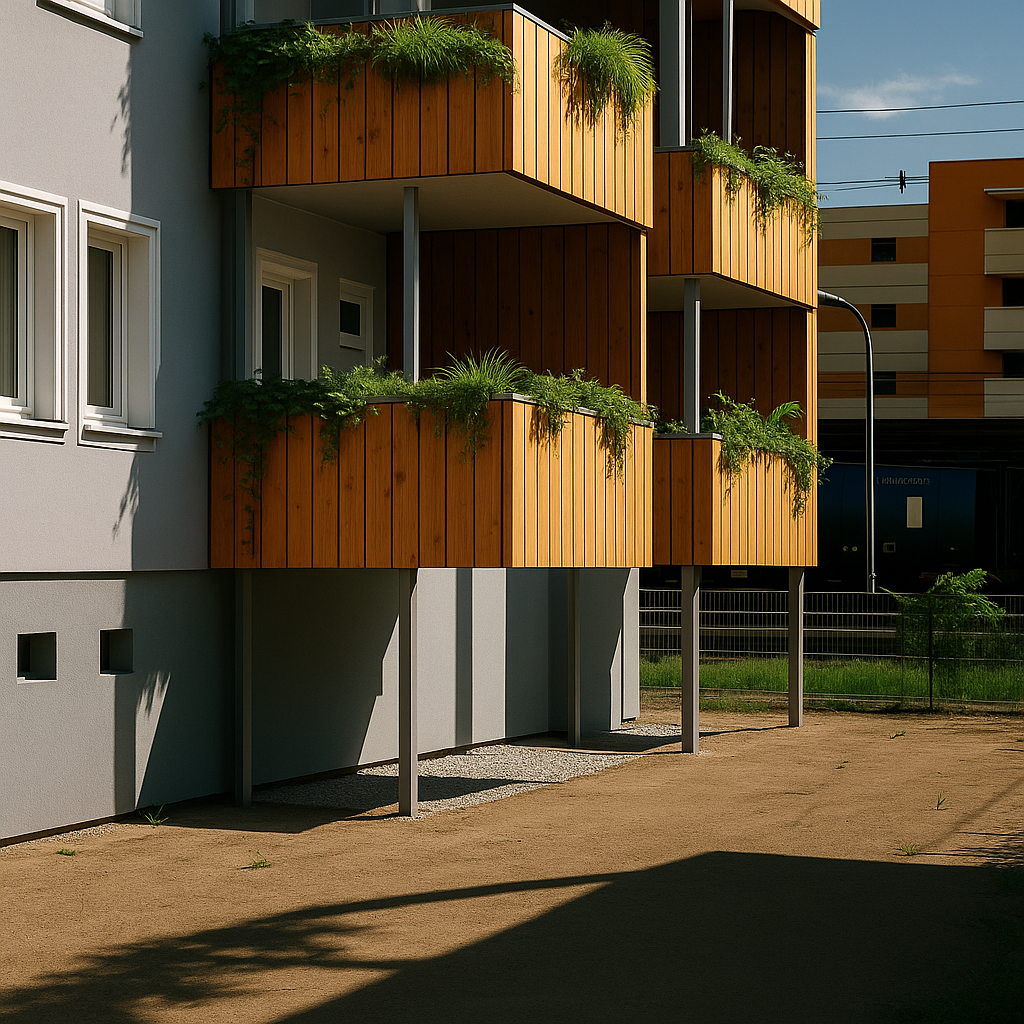
Greening: Enhancements for usability and quality of stay
Plants on balconies actively help to cool the area: through evaporation, they draw heat from the air directly in front of them, thereby noticeably improving the microclimate – a simple yet effective measure, provided the planting is dense enough and is watered reliably.
Not just shielding yourself from the sun, but also making use of it
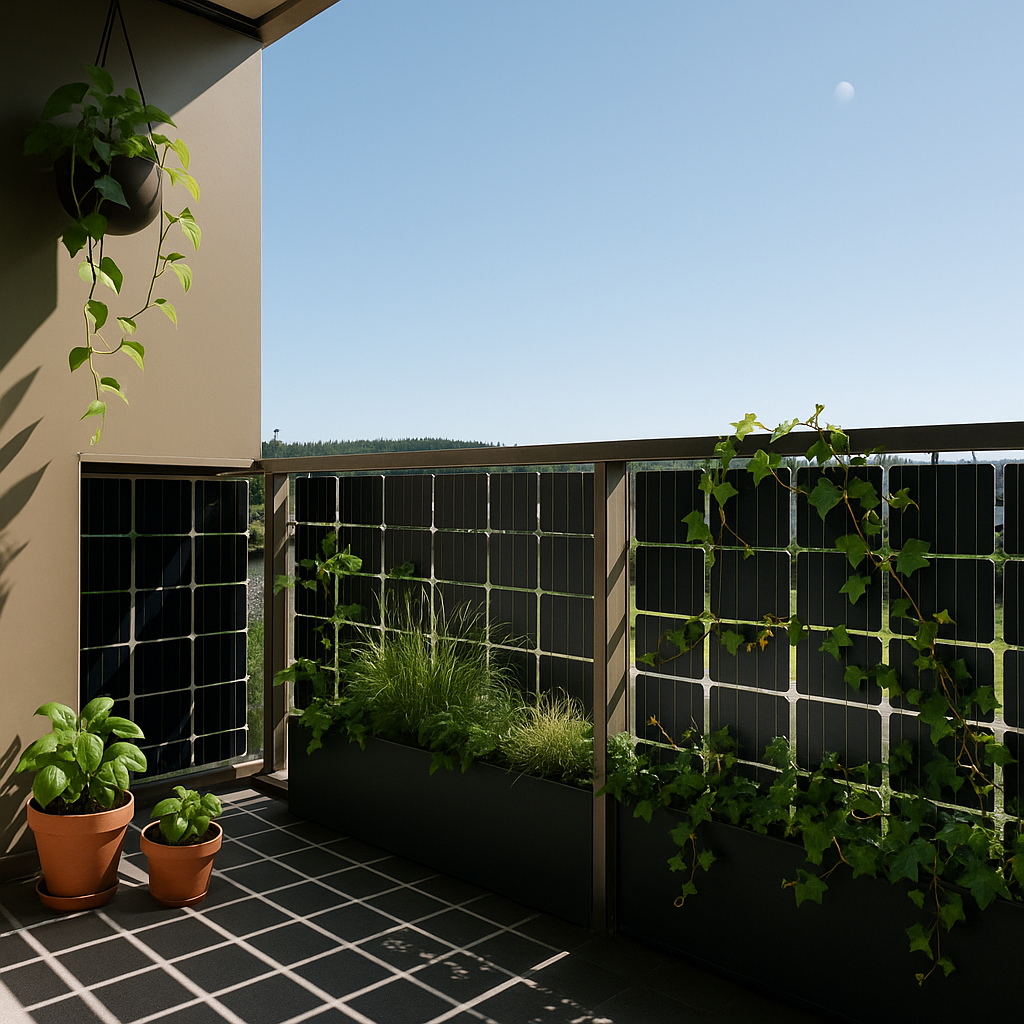
Depending on its orientation, the sunlight on a balcony can be put to good use to generate electricity directly on the building – for general power, stairwell lighting or hot water production. This is something that can be taken into account right from the start when planning a balcony.
What this means for the refurbishment of existing buildings
In occupied buildings, a short, reliably plannable construction phase is paramount, as residents continue to live in their flats throughout the works. Planning shading, greening, potential energy generation and connections together, rather than one after the other, helps to avoid subsequent friction between the architects, building services engineers and the contractor.
The balcony fulfils several functions simultaneously: shading, a space for relaxation, and sometimes even electricity generation via PV panels in the railing. Planning these functions together at an early stage allows for better coordination of interfaces and responsibilities. Modular system solutions such as sybkon can consolidate many of these interfaces. That is why it is worth carrying out a feasibility study before the tender process. This allows requirements to be set out directly in the specifications, without them being lost later on when the contract is awarded to a main contractor.
Conclusion
A balcony will only protect against overheating in summer if its orientation and size are well-matched. Add-ons such as greenery and solar panels can further enhance the quality of life on the balcony and contribute to energy supply. Those who plan holistically from the outset can ensure their balcony refurbishments are future-proof and climate-friendly.