Densification 2.0
The high demand for living space is currently presenting us with major challenges. In order to meet this demand, we need a clever mix of different strategies: In addition to the development of new building areas, the focus is increasingly shifting to the intelligent utilisation of existing structures.
The keyword here is redensification. It is the lever for creating new living space in our cities and municipalities where the infrastructure is already in place. But how can this be achieved in an economically viable way and with a high quality of living?
At INNOVAMETALL, we see three exciting approaches to how property developers (construction companies) and local authorities can make more out of what is already there.
1. utilising potential in the neighbourhood: Living in the second row
Many housing estates have spacious plots of land or large courtyards. New living space can be realised here without having to build new roads or sewers - the property is already fully developed.
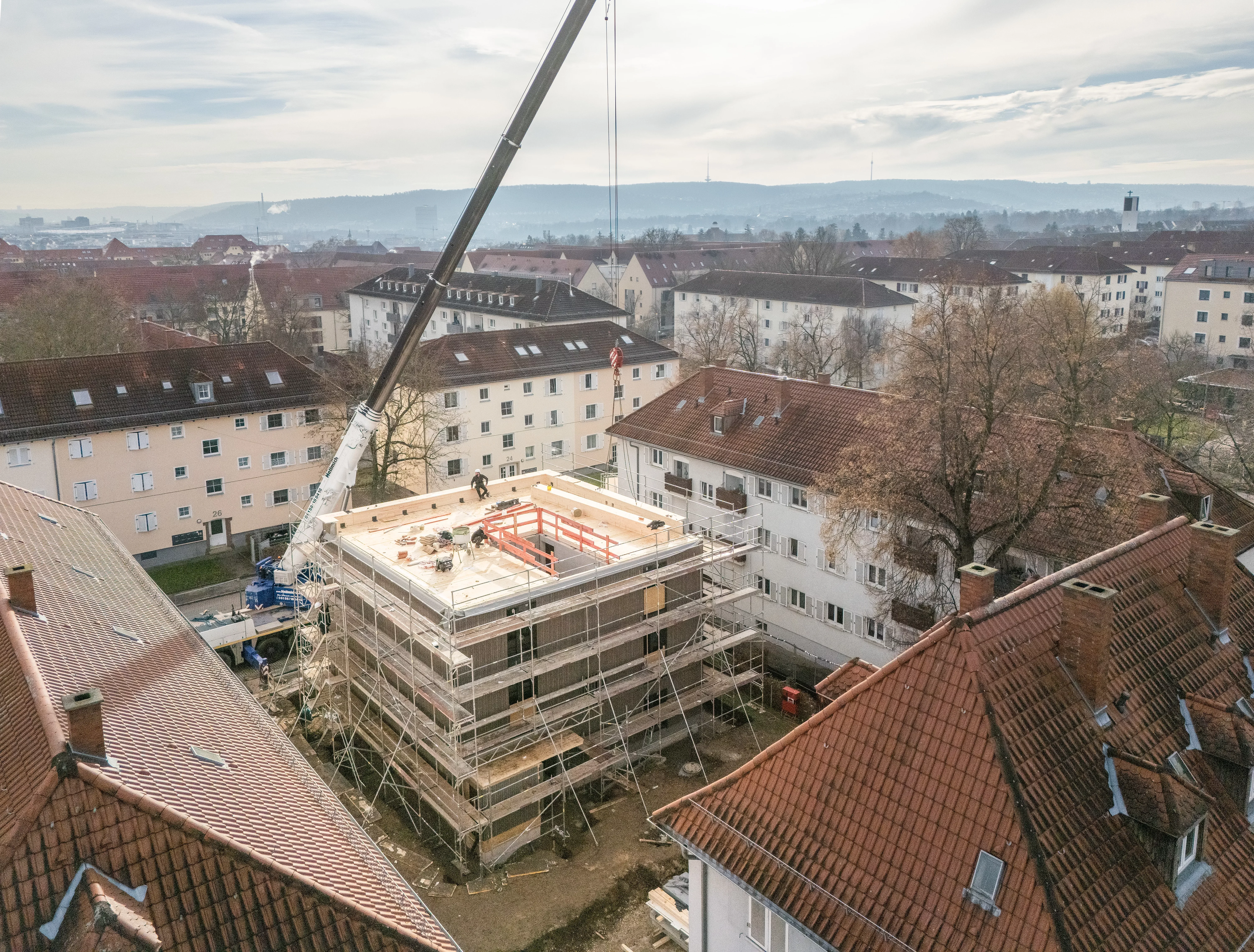
Our partner NOKERA provides an impressive example of this form of redensification. With their serially produced "point houses" in timber construction, "gaps" in existing residential neighbourhoods are efficiently closed.
To ensure that these new buildings in the inner courtyard are not only functional, but also offer a high quality of stay, the private outdoor space is crucial. For a current NOKERA project (More information) our sybkon balconies improve the quality of life for residents and are also a visual benefit for the building.
2. top-up - the flight to the top: When renovation pays for itself
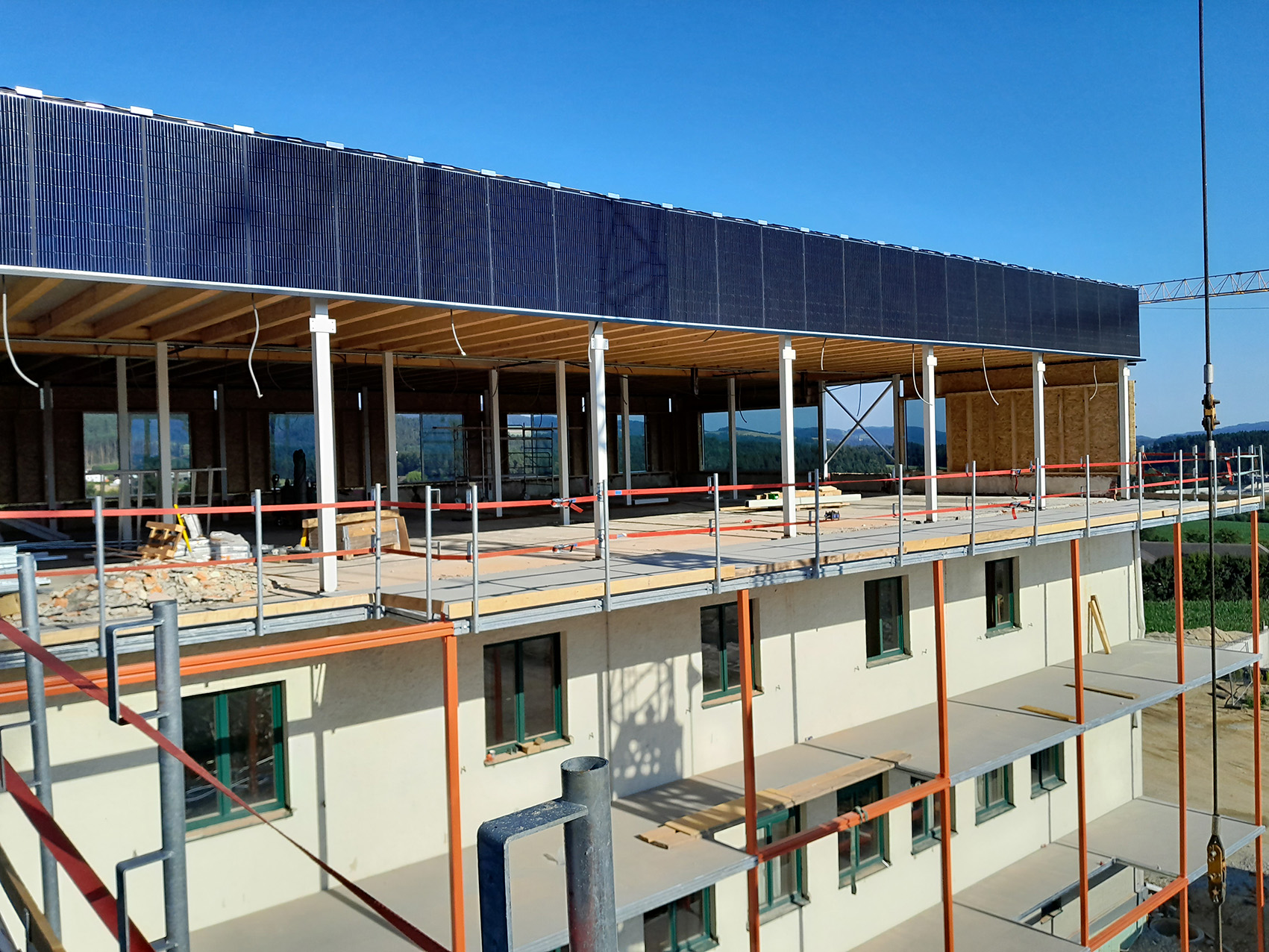
A particularly elegant solution is to build without taking up new space: adding storeys. A flagship project for this "on-top building" is the GLUATNEST project (more info) in Freistadt.
Here, the economic benefits of redensification were enormous:
The financing lever: the sale or letting of the newly created top-floor flats can often already finance a large part of the refurbishment costs for the existing building.
Synergy effects: If construction is taking place anyway, the building underneath is usually refurbished to improve its energy efficiency. This increases the value of the property and reduces the operating costs for all parties.
This upward extension turns an older existing property into a modern, future-proof building. Access is provided by an arcade, for example, which fulfils fire safety regulations on the one hand and offers more comfort for the existing residential units on the other.
3. rethinking infrastructure: mobility instead of compulsory parking
Every new residential unit raises the question: "Where should the cars park?" Particularly in the case of redensification in inner courtyards or when adding storeys, space is in short supply and the construction of underground car parks is often disproportionately expensive. This is why many residential properties do not even consider adding a storey.
But there is a solution: a look at Germany shows how modern legislation can support property developers: In many German federal states and municipalities (for example, through the state building regulations or municipal parking space statutes), it is now possible to significantly reduce or waive the obligation to build car parking spaces if a coherent mobility concept is submitted instead. Mobility behaviour is also changing.
The principle: high-quality bicycle infrastructure replaces car parking spaces. Instead of expensive car parking spaces for cars that are rarely used, developers offer residents sharing services for electric cargo bikes. This not only saves a lot of space but also construction costs.
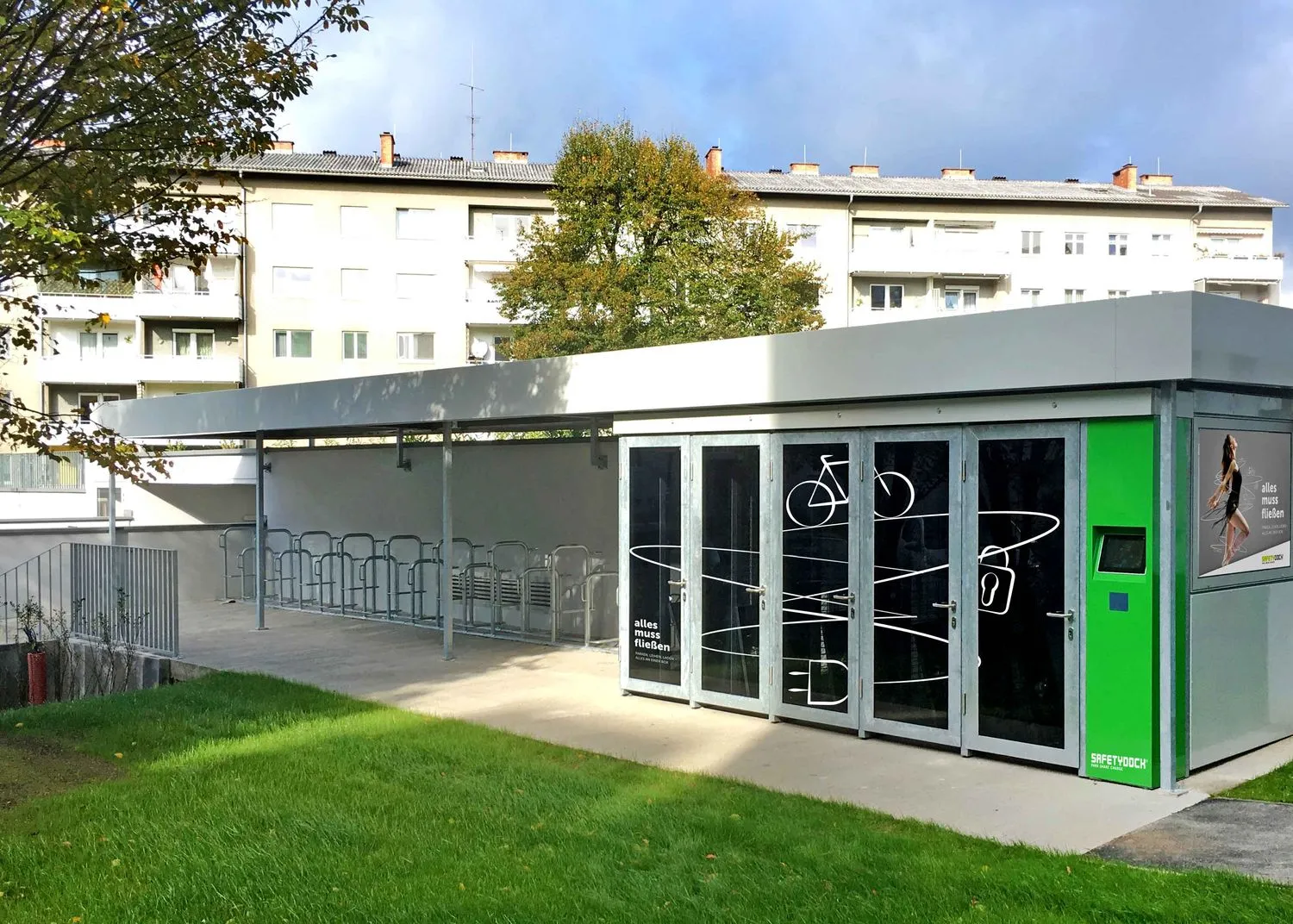
For this concept to be accepted by authorities and tenants, a system like the safetydock mobility solutions is needed:
Space-saving: where a car can barely park, there is room for several safetydock bicycle parking spaces.
Safe & charged: The e-cargo bike is protected against theft and vandalism and is charged at the same time.
Legally compliant: With such a permanently installed infrastructure, the requirements for alternative mobility concepts can be easily met.
Added value: For added convenience for residents, the safetydock parcel station module can also be integrated to provide simple and secure parcel storage options.
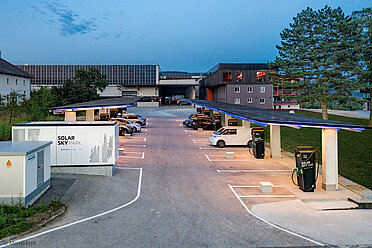
In dialogue with Schiene OÖ, a holistic concept emerged – one that goes beyond pure functionality:
- How can we make commuting more comfortable?
- How can energy be generated and used directly on site?
- How can we create lasting value for commuters, operators, and the environment?